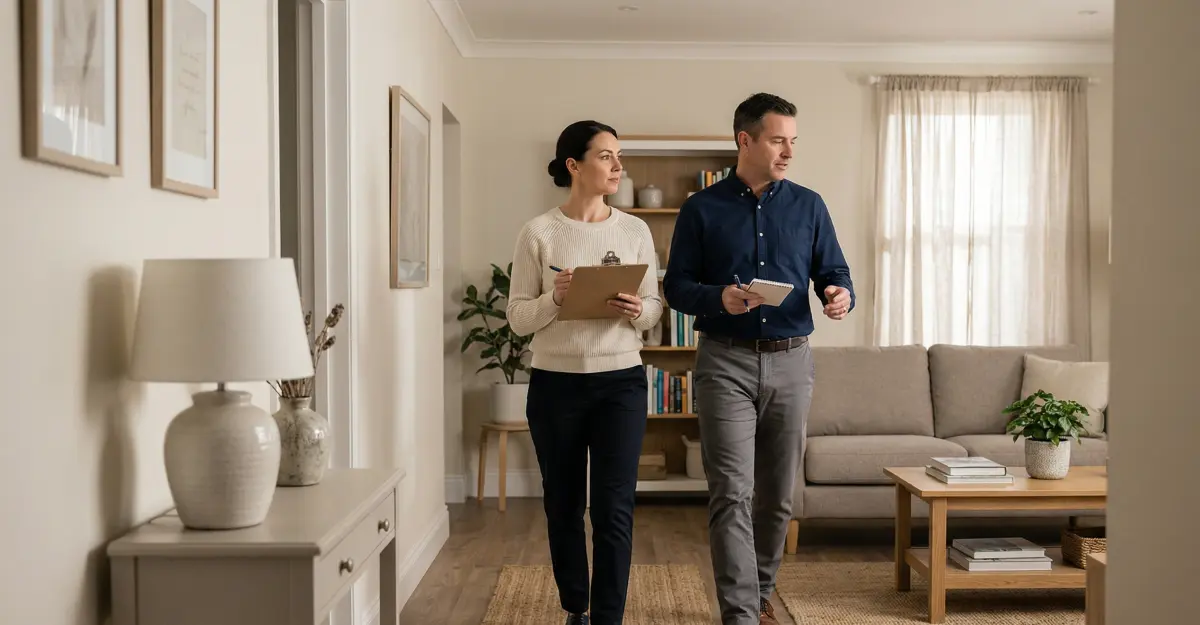
Domestic Couple vs Management Couple: Estate Guide

Publish Date

November 6th, 2025

In recent years, there has been a noticeable rise in the demand for couples working within private households, luxury estates, and hospitality settings. High-net-worth (HNW) and ultra-high-net-worth (UHNW) families, as well as estate owners and boutique hospitality businesses, often find that employing a couple brings unique benefits that single hires cannot provide. The primary advantage lies in efficiency: by hiring two individuals who already share a strong personal partnership, households gain a team that works seamlessly together, communicates effectively, and provides consistent coverage across multiple areas of responsibility. Trust is another defining factor, as employers often feel greater peace of mind knowing that a couple can manage their estate with loyalty, discretion, and mutual accountability.


The distinction between a domestic couple and a management couple is subtle but highly significant. Domestic couples are primarily focused on hands-on household tasks such as cleaning, cooking, or maintenance, and they provide direct daily support for the smooth running of a residence. Management couples, on the other hand, add another layer of expertise by bringing leadership and organizational oversight to the estate. They often manage other staff members, coordinate vendors, oversee budgets, and ensure that the estate functions at a professional standard. For families or estate owners, understanding this difference is the first step in identifying which type of couple best fits their lifestyle and operational needs.

Understanding the Domestic Couple Role

A domestic couple is best described as a versatile household team, typically composed of two individuals who work and live together on a private estate, in a luxury residence, or sometimes in a vacation property. Their role is deeply rooted in practical, hands-on responsibilities that ensure the household operates smoothly on a day-to-day basis. Depending on the size and nature of the property, their tasks may range widely but often include housekeeping, laundry care, meal preparation, gardening, general property maintenance, and even support with childcare or pet care. The ability to divide duties according to each partner’s strengths allows for comprehensive coverage of the estate’s needs, creating a flexible and dependable household solution.


One defining feature of domestic couple roles is the live-in arrangement. By residing on the property, the couple is able to provide constant availability and rapid response when issues arise. This arrangement is particularly appealing to families or estate owners who value reliability, continuity, and security. For the employer, there are also financial advantages: hiring a couple often proves more cost-effective than employing multiple individual staff members for separate roles. Beyond cost savings, domestic couples frequently form long-term relationships with their employers, building trust and providing stability over many years.


Employment terms can vary, but typically, domestic couples receive competitive salaries along with housing, utilities, and sometimes additional benefits such as health insurance or travel allowances. Employers benefit not only from the couple’s skills but also from the loyalty and commitment that comes with a long-term placement. This makes domestic couples an attractive option for households that want hands-on support delivered with consistency, discretion, and dedication.

Understanding the Management Couple Role

While domestic couples are highly valued for their practical, hands-on household support, management couples bring an added layer of expertise that extends into leadership and operational oversight. A management couple typically takes on broader responsibilities within a private estate, luxury residence, or hospitality setting, functioning as both supervisors and coordinators of day-to-day operations. Their duties often go beyond performing tasks themselves; instead, they focus on ensuring that other staff members, vendors, and service providers work in harmony to maintain the property at the highest standard.


In many arrangements, one partner may serve as the estate or household manager, overseeing financial planning, budgets, and contracts with vendors or service providers. The other may focus on guest services, administrative duties, event coordination, or staff scheduling. This division of labor allows management couples to cover a wide range of responsibilities while also bringing complementary skill sets to the role. For example, in a luxury villa or boutique lodge, one partner may manage the back-of-house operations such as logistics, maintenance, and vendor relations, while the other ensures that the guest experience is seamless, overseeing dining, entertainment, or hospitality services.


The hallmark of a management couple is their ability to act as leaders within the estate or organization. They function as the point of contact between principals, staff, and external service providers, ensuring not only efficiency but also compliance with safety standards, legal regulations, and the property owner’s expectations. By offering both strategic oversight and operational leadership, management couples bring structure and professionalism to complex estates where multiple moving parts must work together effortlessly.

Key Differences Between Domestic Couples and Management Couples

Although both domestic and management couples contribute significantly to the smooth functioning of private households and estates, the nature of their roles is distinct. Domestic couples are typically hands-on and operational. They perform daily tasks such as cleaning, cooking, gardening, and property upkeep, making them ideal for smaller households or estates where a practical, all-around support team is required. Their value lies in their versatility, constant presence, and the trust they build over long-term service.


Management couples, by contrast, operate at a higher level of responsibility, providing leadership and strategic oversight. Instead of focusing exclusively on daily tasks, they direct the activities of other household staff, handle budgeting and financial planning, and coordinate events or large-scale operations. They are best suited for larger properties or estates where supervision, organizational planning, and staff management are essential.
To simplify the distinction:

  • Domestic Couples → Operational, hands-on, ideal for smaller estates, focus on practical household duties.

  • Management Couples → Strategic, supervisory, suited for larger or more complex estates, focus on leadership, budgeting, and coordination.

For employers, the choice between the two depends largely on the scale and complexity of the household. A family with a single residence may find a domestic couple perfectly suited to their needs, while an expansive estate with multiple residences, staff members, and frequent events will often benefit more from the structured oversight of a management couple. Understanding these differences ensures that households can make informed decisions, aligning their staffing approach with their lifestyle and operational requirements.

Benefits of Hiring Domestic Couples

One of the strongest appeals of hiring a domestic couple is the balance of cost-effectiveness and trust that this arrangement brings. Because two individuals are employed together, households gain the benefit of a wide skill set while paying one combined salary package, often including accommodation and living allowances. This makes them an efficient solution for households that do not require the scale of an entire team of staff but still want consistent, reliable support across multiple areas of daily life.


Another key advantage lies in their flexibility and adaptability. Partners can divide tasks naturally according to their strengths—for example, one may focus on housekeeping and cooking while the other handles gardening, maintenance, or chauffeuring. This organic distribution of responsibilities provides households with coverage across many essential needs, all handled by two trusted individuals who coordinate seamlessly with each other.


Domestic couples also bring stability and continuity to the estate. Because they often live on-site, they can respond quickly to unexpected needs and emergencies, ensuring the property and its residents are always supported. This live-in arrangement also encourages loyalty, as many couples remain in positions for years, building strong relationships with their employers and offering a sense of familiarity and security that rotating staff cannot provide.

That said, employers considering this arrangement should keep several practical elements in mind. Accommodations must be suitable for two people, and contracts should clearly outline responsibilities, working hours, and expectations to prevent imbalance or burnout. Fair division of labor is especially important, as tasks can sometimes become unevenly distributed if not discussed upfront. When handled thoughtfully, however, domestic couples can be one of the most stable, trustworthy, and versatile staffing solutions for private households or estates with modest operational needs.

Benefits of Hiring Management Couples

For larger estates or properties where operational complexity is high, management couples offer a distinct set of benefits that go far beyond hands-on support. Their primary strength lies in their ability to bring professional leadership and oversight to a household, ensuring it functions much like a well-run organization. With one or both partners experienced in management, they provide structure to staffing, streamline workflows, and act as the communication bridge between principals, staff, and external vendors.


One of the most significant advantages is the way management couples reduce the administrative and operational burden on principals. Instead of an estate owner or UHNW family having to handle multiple service providers, budgets, and staffing concerns directly, the management couple coordinates these elements on their behalf. They often take charge of vendor management, financial oversight, and contract negotiations, freeing principals to focus on their lifestyle or business without being weighed down by the daily complexities of running an estate.


Their role is also invaluable in coordinating larger staff teams. From overseeing housekeepers and chefs to scheduling groundskeepers and event staff, management couples ensure that all personnel work in harmony and that operations are carried out to the highest standard. This leadership ensures not only efficiency but also consistency, which is vital for properties that host regular events, welcome VIP guests, or maintain extensive grounds and facilities.


Management couples often bring with them strong professional backgrounds—many come from hospitality, luxury hotel management, operations leadership, or high-level household service. These experiences equip them with skills in event planning, compliance, and crisis management, all of which are highly valuable in private estates. Their expertise makes them particularly suited to UHNW households, boutique hotels, or estates where discretion, reliability, and professional polish are essential.


Ultimately, hiring a management couple is about elevating the estate’s operations to a level of strategic sophistication. They not only oversee day-to-day duties but also anticipate challenges, plan for long-term efficiency, and safeguard the reputation and comfort of the household. For principals seeking peace of mind, professionalism, and seamless coordination, a management couple is often the most effective solution.

Salary, Contracts, and Employment Terms

Compensation for domestic and management couples varies widely depending on the size of the estate, geographical location, and the scope of responsibilities. Generally, domestic couples earn less than management couples, as their role is more operational and hands-on. However, their employment package often includes valuable in-kind benefits such as on-site housing, utilities, and sometimes meals or transportation. This arrangement not only reduces the couple’s personal living expenses but also makes it easier for them to remain close to the property, ensuring availability and quick response to the household’s needs.


By contrast, management couples command higher salaries, reflecting their greater leadership and organizational responsibilities. Their compensation packages often mirror those of senior estate managers, with salaries adjusted to account for the complexity of their duties—ranging from overseeing multiple staff members to managing vendor contracts, budgets, and large-scale events. In addition to housing, they may also receive performance bonuses, travel allowances, or professional development support, given the professional nature of their role.

Equally important is the structure of employment terms. Employers should always implement clear contracts that outline responsibilities, expected working hours, compensation, benefits, and termination clauses. Confidentiality agreements are essential, particularly in UHNW households, where discretion and trust are critical. Another key consideration is the choice between live-in and live-out arrangements. While live-in couples provide round-the-clock availability, this requires adequate and private accommodations. Live-out couples may allow for clearer work-life boundaries but reduce immediate availability.


Recruitment is also best managed through specialized employment agencies that focus on couple placements, as these agencies understand the unique dynamics and requirements involved. They ensure that both partners are vetted, properly matched to the estate’s culture, and equipped with the necessary skills. By handling contracts and onboarding carefully, employers can set the foundation for a long-term, stable, and mutually beneficial arrangement.

Challenges and Considerations for Employers

While the advantages of hiring couples are clear, employers must also acknowledge potential challenges that may arise. One of the most significant is managing the relationship dynamics between the couple themselves. Since they live and work together, personal disagreements can sometimes spill over into their professional lives, potentially affecting household harmony. For live-in couples, there is also the issue of privacy—both for the principals and for the couple, as constant proximity can blur the line between personal and professional space.


Another consideration is the risk of blurred boundaries between roles. Without clear agreements, tasks may become unevenly distributed, leading to dissatisfaction or inefficiency. For management couples in particular, the risk of role overlap can cause confusion or even conflict within the staff hierarchy if leadership lines are not properly defined. Employers must ensure that responsibilities are clearly outlined in advance, and that staff understand who to report to for specific matters.


Cost is another factor. Management couples, while highly skilled, often come with higher salary requirements, which may not be practical for smaller estates or households with limited budgets. Employers must weigh the long-term benefits of professional oversight against these financial commitments.


Finally, it is crucial to consider lifestyle compatibility. Couples must not only integrate smoothly into the professional demands of the estate but also fit with the family’s culture, expectations, and pace of life. When this alignment is missing, even highly skilled couples may find it difficult to sustain the role over the long term. Employers should take into account not just qualifications and experience but also the personalities, values, and long-term aspirations of the couple.


By carefully evaluating these challenges, establishing clear agreements, and selecting the right couple through trusted recruitment channels, employers can avoid pitfalls and enjoy the stability, efficiency, and professionalism that domestic and management couples bring to private estates.

Choosing the Right Fit for Your Estate

Selecting between a domestic couple and a management couple ultimately comes down to the nature and scale of the estate, as well as the principal’s lifestyle, priorities, and expectations. For smaller estates or vacation properties, where the focus is on hands-on support such as cleaning, cooking, gardening, and maintenance, a domestic couple is often the most practical choice. Their adaptability and cost-effectiveness make them ideal for households that do not require a full staff hierarchy but still value consistency and loyalty from a live-in team.


On the other hand, larger estates, multiple residences, or properties that frequently host guests and events demand a more structured approach. In such cases, a management couple provides the leadership necessary to oversee staff, manage vendors, handle budgets, and ensure that operations run seamlessly. Their professional background—often rooted in hospitality or estate management—allows them to act as estate executives, giving principals peace of mind that every detail is under control.

Employers should begin the decision-making process by evaluating several key factors:

  • Estate size and complexity – Is the property a single family home or a large, multi-property estate?

  • Existing staff structure – Do you need supervisory leadership or primarily hands-on household support?

  • Budget considerations – Are you seeking cost-effective solutions or are you prepared to invest in high-level management expertise?

  • Lifestyle and privacy needs – How much daily interaction do you expect with staff, and how important is professional discretion and boundary-setting?

By answering these questions honestly, principals can more clearly identify whether a domestic couple or a management couple aligns with their household’s operational needs and long-term vision.

Conclusion & Call to Action

Both domestic and management couples bring distinct strengths that elevate the efficiency, comfort, and security of private estates. Domestic couples are ideal for smaller residences, offering hands-on support, flexibility, and deep loyalty that ensure the seamless running of daily operations. Management couples, on the other hand, excel in larger or more complex estates, where their leadership, organizational expertise, and structured approach foster long-term stability and excellence.

Ultimately, the right choice depends on your estate’s size, your lifestyle, and your long-term objectives. The key is to find a couple whose experience, skill set, and personality perfectly align with your household’s culture and expectations.

If you’re uncertain which option best suits your estate, professional recruitment guidance can make all the difference. Expert agencies can help you clarify your priorities, source and vet qualified candidates, and secure a couple who will bring lasting value to your home.

Ready to take the next step? Explore Oplu’s specialized services designed to support every aspect of estate staffing and management:

Oplu

Oplu

Oplu Team