The hotel-to-household transition is one of the most common career moves in UHNW private service. Strong hotel professionals make natural private staff. The skill base is real, the discipline transfers, and the lifestyle is often a meaningful upgrade. But the transition is not automatic. The difference between hospitality and private service is significant, and the candidates who do not adjust often leave their first private role within twelve months.
This article explains what transfers, what does not, and how to position yourself for the move. It is written for hotel professionals at any level (front-of-house, food and beverage, rooms, butler programmes, executive housekeeping) considering the transition.
For broader career context see How Oplu Selects Candidates. For role-specific guides see our How to Become a Butler, How to Become a Housekeeper, and How to Become a Private Chef.
For current vacancies see our job board. To be considered for future searches, submit your CV.
Why hotel professionals are natural private staff
Three things hotels train that private service rewards.
Standards under pressure. Five-star and ultra-luxury hotels deliver consistent standards across hundreds of guests, hundreds of rooms, every day. The discipline of holding that standard is the same discipline private service requires.
Discretion. Hotel professionals at the senior level handle high-net-worth and high-profile guests routinely. The instinct for privacy and discretion is already developed.
Service mentality. Anticipation, calm, presence. The behavioural foundations of private service are taught in hotels through guest service.
These foundations make the technical transition straightforward. The interview process for private roles is largely confirming these are present.
What transfers cleanly
Front-of-house and rooms division skills. Direct transfer to butler, House Manager, and front-of-house roles in private households.
Concierge work. Direct transfer to senior PA, Personal Concierge, and lifestyle management roles. The information networks and supplier relationships built in concierge translate well.
Executive housekeeping and rooms management. Direct transfer to private Executive Housekeeper roles. The technical depth in textile care, surface management, and team leadership translates.
Restaurant and food and beverage management. Transfers to Private Chef roles for those with cooking backgrounds, House Manager roles for those with operational backgrounds, butler roles for those with service backgrounds.
Five-star butler programmes. Direct transfer to private butler roles. The training pipeline at properties like Claridge's, the Connaught, the Savoy, the Mandarin Oriental, the Ritz-Carlton, and equivalents is a recognised qualification in the private market.
For role-specific transitions see How to Become a Butler, How to Become a Housekeeper, and How to Become a Private Chef.
What does not transfer
Five things hotels teach that private service does not need, and may even penalise.
Brand identity. Hotel staff are trained to embody the brand. In private service, the only brand that matters is the principal's preferences. Candidates who maintain hotel-brand positioning sometimes feel out of place in a household.
Volume and turnover. Hotels operate on continuous turnover. Private households operate on continuity. The instinct to "process" guests through standard service touches does not work when the same principal is there every day for years.
Brigade leadership. Hotels are large operations with structured teams. Private households are smaller and more personal. The leadership skills transfer but the scale and structure are different.
Polished neutrality. Hotels train staff to be uniformly polite to all guests. Private households reward warmth, individuality, and personal calibration. The polished hotel manner can read as cold in private service.
Recognition culture. Hotels offer awards, employee-of-the-month, public acknowledgement. Private service is largely invisible. The lack of external recognition can be disorientating for hotel-trained staff.
Common transition mistakes
Five patterns produce hotel-to-household placements that fail in the first year.
Underestimating the lifestyle change. The hotel professional accustomed to shifts ending and going home finds private service's continuous-presence rhythm exhausting. Live-in roles intensify this.
Overplaying brand experience. Candidates who lead with their hotel name (Claridge's, Mandarin, Aman) instead of their personal capabilities. Strong principals care about the candidate, not the badge.
Misreading the principal-staff relationship. Hotels keep guests at a polite distance. Private households reward warmer, more individualised relationships. Hotel-trained staff sometimes maintain inappropriate distance.
Missing the long-term horizon. Hotels reward six-month performance. Private households reward years of consistency. Candidates who treat the first months as a high-stakes audition often signal the wrong things.
Failing to drop the formality dial. Some principals prefer slightly less formal service than hotels train. Reading the level of formality the household actually wants and adjusting is a meaningful skill.
For more on common hiring mistakes from the employer side that produce hotel-to-household placements that fail see Common Hiring Mistakes in Private Offices.
How to position yourself for the move
Five practical steps move a hotel candidate from "interested" to placed.
Position your CV around capabilities, not properties. "Senior Butler with 12 years' service in five-star ultra-luxury properties" rather than "Butler at Claridge's." The capabilities matter more than the badge.
Be specific about technical depth. Wine knowledge, languages, formal service traditions, dietary specialisms. Specific skills differentiate at the senior private level.
Get your references in order. References from senior hotel managers (general managers, hotel managers, executive housekeepers, food and beverage directors). Generic HR references are weak.
Be honest about lifestyle preferences. Live-in vs live-out, single residence vs travelling, urban vs country. Mismatches at the lifestyle level produce departures within twelve months.
Engage the right firm. Specialist private recruitment firms understand the hotel-to-household transition specifically. Generic hospitality recruiters do not place into UHNW private at the senior level. For more on what to expect see What to Expect When You Engage a Private Recruitment Firm.
What it pays to make the move
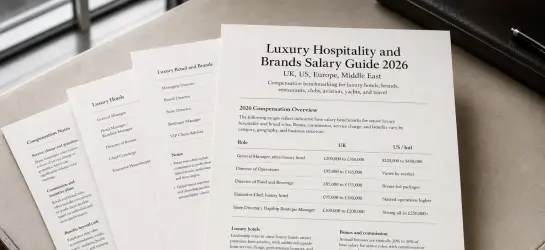
Compensation typically increases in the move from hotel to private at senior level, particularly for principal household roles. UK ranges for context.
Senior butler. Hotel head butler: £65,000 to £95,000 base. Private senior butler: £70,000 to £100,000 base, often with accommodation in country roles.
Executive housekeeper. Hotel executive housekeeper: £60,000 to £95,000 base. Private executive housekeeper: £75,000 to £115,000 base.
General manager / House Manager. Hotel general manager (UK five-star, 100-250 keys): £160,000 to £275,000 base. Private House Manager / Estate Manager: £110,000 to £220,000 base depending on residence scale, often with accommodation.
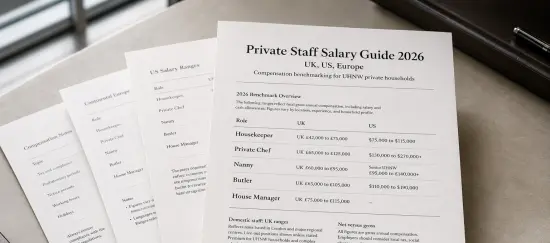
The headline numbers move modestly. The lifestyle, predictability, and longevity often improve substantially. For full domestic compensation context see our Private Staff Salary Guide 2026.
How Oplu approaches hotel-to-household placements
We place hotel candidates into private households regularly. The conversations we have with candidates before placement focus on three things: the lifestyle change, the cultural shift from hotel to household, and the specific principal the candidate would be joining. Strong placements depend on getting all three right.
For candidates exploring the move, we are happy to have introductory conversations even if no specific role is open. Hotel-trained candidates with the right temperament are valuable to our network and we keep an open file for potential future briefs.
For current vacancies see our job board. To be considered for future searches, submit your CV.
Further insights from the Oplu series