Private nannying at the senior level is a serious profession. Strong pay, deep family relationships, and at the very top end (Norland-trained, multi-residence travelling roles) some of the most stable careers in private service. This guide explains how the market actually works, what training employers value, what compensation looks like in 2026, and how to position yourself for placement in a UHNW household.
It is written for candidates considering the field and for nannies in nursery, preschool, or general childcare looking at the move into private service.
For the role overview see What Is a Nanny and Manny?.
For current vacancies see our job board. To discuss a placement get in touch.
What private nannying involves
The job covers five threads, in different proportions depending on the family.
Daily care. Routine, meals, sleep, hygiene, school runs, transitions through the day. The minute-to-minute work that keeps the children well.
Development. Age-appropriate learning, language development, motor skills, social skills, emotional regulation. Strong nannies actively support development, not just supervise.
Health and safety. First aid, safeguarding, medication management where required, calm response to medical or emergency situations.
Discipline and consistency. Holding the agreed approach to discipline. Working with the parents on a consistent standard. Ensuring children experience the same expectations from nanny and parents
Family integration. Working closely with parents, other household staff, school, doctors, and activity providers. The nanny is the consistency layer across all the people in a child's life.
The job is intense, personal, and rewarding for the right temperament. The financial rewards at the senior level are real but earned over years.
The pathways into private nannying
Three main routes.
Formal childcare training. Norland College, Chiltern College, NCFE CACHE Level 3, BTEC Childhood Studies, Early Years Foundation Stage qualifications. The most common starting point. Some routes (Norland in particular) include placement components.
Nursery and preschool experience. Years in a nursery or preschool setting before the move to private. The work translates directly. Many senior nannies have several years of nursery experience before going private.
Adjacent backgrounds. Teachers transitioning into private (often into governess rather than nanny roles). Healthcare backgrounds (paediatric nursing) for special-needs or medically-complex households. Sports coaching, particularly for mannies with active families.
The career path to senior nanny or Norland-equivalent typically takes seven to fifteen years. The pool at the senior UHNW level is small. Most placements run through specialist firms or direct introduction.
Norland College in Bath is the most prestigious nanny training institution in the UK and arguably globally. The qualification (BA in Early Years Development and Learning) is rigorous and includes formal training in:
Child development and education through early years.
Nutrition and meal planning for children.
Safeguarding and child protection.
Practical childcare across infancy through primary school.
Discreet professional service in private households.
Security awareness for high-profile families.
Self-defence and emergency response.
Travel and multi-residence working.
Norland graduates command a meaningful premium over generally-qualified nannies and are sought specifically by UHNW and high-profile families globally. The waiting list for Norland graduates is significant; the supply is limited.
Other respected institutions include Chiltern College, the Princess Christian College (now closed but graduates still active), and various NCFE CACHE-accredited programmes.
The strongest non-Norland route is NCFE CACHE Level 3 plus several years of nursery and private experience. The pathway is longer but produces strong nannies for the senior market.
What employers look for
The dimensions principals interview for at this level.
Genuine warmth. The most important variable. Children read it instantly. So do parents. Strong candidates love the work; weak candidates do the work.
Consistency. The same standards, every day, for years. Children thrive on consistency from the people closest to them. Strong nannies hold it; weak ones drift.
Discretion. A small market. UHNW families are concerned about everything from privacy to security. The standard for what is and is not discussed outside the household is absolute.
Calm under pressure. Children get sick, fall, have meltdowns, push limits. The nanny who stays calm and contained is the nanny who works.
Boundaries with parents. A nanny who slides into family-friend or quasi-parent territory creates problems. Strong nannies maintain professional boundaries while building warm relationships.
We assess for these in interview. CV review filters for technical track record. The behavioural fit decides the placement.
For more on how we filter at the interview stage see How Oplu Selects Candidates.
What private nannies earn in 2026
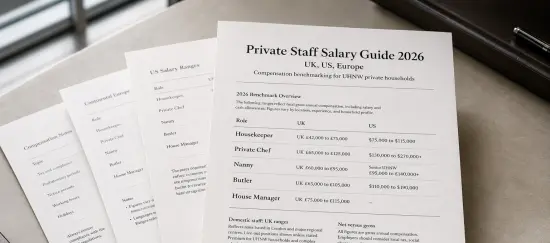
UK ranges from Oplu placement experience.
Junior nanny / mother's help. £35,000 to £50,000 base. Live-in arrangements common.
Mid-level nanny. £45,000 to £65,000 base.
Senior nanny. £55,000 to £80,000 base. Bonus 5% to 15%.
Norland nanny / specialist senior nanny. £75,000 to £110,000 base. Bonus 10% to 20%.
Travelling nanny in multi-residence households. £80,000 to £140,000 base. Travel paid.
Governess. £75,000 to £120,000 base, depending on educational specialism.
Maternity Nurse / Newborn Care Specialist. Day rates of £200 to £450 for short engagements. Annual employment rates higher than standard nanny scales for those who do this work continuously.
US ranges sit roughly 30% to 50% above UK at comparable scale. Middle East roles are typically structured net of tax.
For full domestic compensation context see our Private Staff Salary Guide 2026.
How to get hired
Five practical steps move a candidate from "looking" to placed.
Build a focused CV. Specific families (or anonymised types where confidentiality requires it), specific responsibilities, ages of children cared for, specific specialisms (newborn care, twins, special needs, multilingual). Generic descriptions tell employers nothing.
Get your references in order. Direct references from previous parents you have worked for. The strongest references are from UHNW families who can speak to your discretion and judgement. Generic agency references are weak.
Specialise where possible. Generalist nannies are common. Nannies with specific specialisms (newborn care, twins, governess track, multilingual, sports-active) stand out at the mid and senior level.
Maintain qualifications. Paediatric first aid current. Safeguarding training up to date. Continuing professional development visible.
Engage the right firm. Specialist private recruitment firms know which UHNW families are hiring. Generic nanny agencies and online platforms rarely give access to the senior pool. For what to expect from a professional engagement see What to Expect When You Engage a Private Recruitment Firm.
Career progression
A typical path.
Years 1-3. Junior nanny or mother's help. Build experience across age groups. Develop references.
Years 3-7. Mid-level nanny. Take responsibility for primary care of one or more children. Build a specialism (newborn, governess track, multilingual, multi-residence).
Years 7-12. Senior nanny. Run the children's lives day-to-day in coordination with parents. Possibly first travelling or multi-residence role.
Years 12-20+. Senior nanny in established UHNW families, governess, multi-residence travelling nanny, or Maternity Nurse / Newborn Care Specialist (with continuous short engagements).
Some senior nannies stay with one family for ten or fifteen years through multiple children. This continuity is valuable to families and candidates and is a legitimate career outcome.
How Oplu places nannies
We work across the nannying function from junior placements through senior nanny, governess, and Norland-tier roles. Our process is the same at every level: scoping the brief in detail, running the search through our network of placed and known nannies, interviewing in depth, and presenting a small shortlist with full written profiles.
We pay particular attention to references and verification at this seniority. The personal nature of the role means reference quality matters more than CV polish.
For current vacancies see our job board. To discuss a placement get in touch.
Further insights from the Oplu series